Steel · Rail · River
The history of Lakewood Falls
A city founded on production, shaped by labor, and carried forward by institutions.

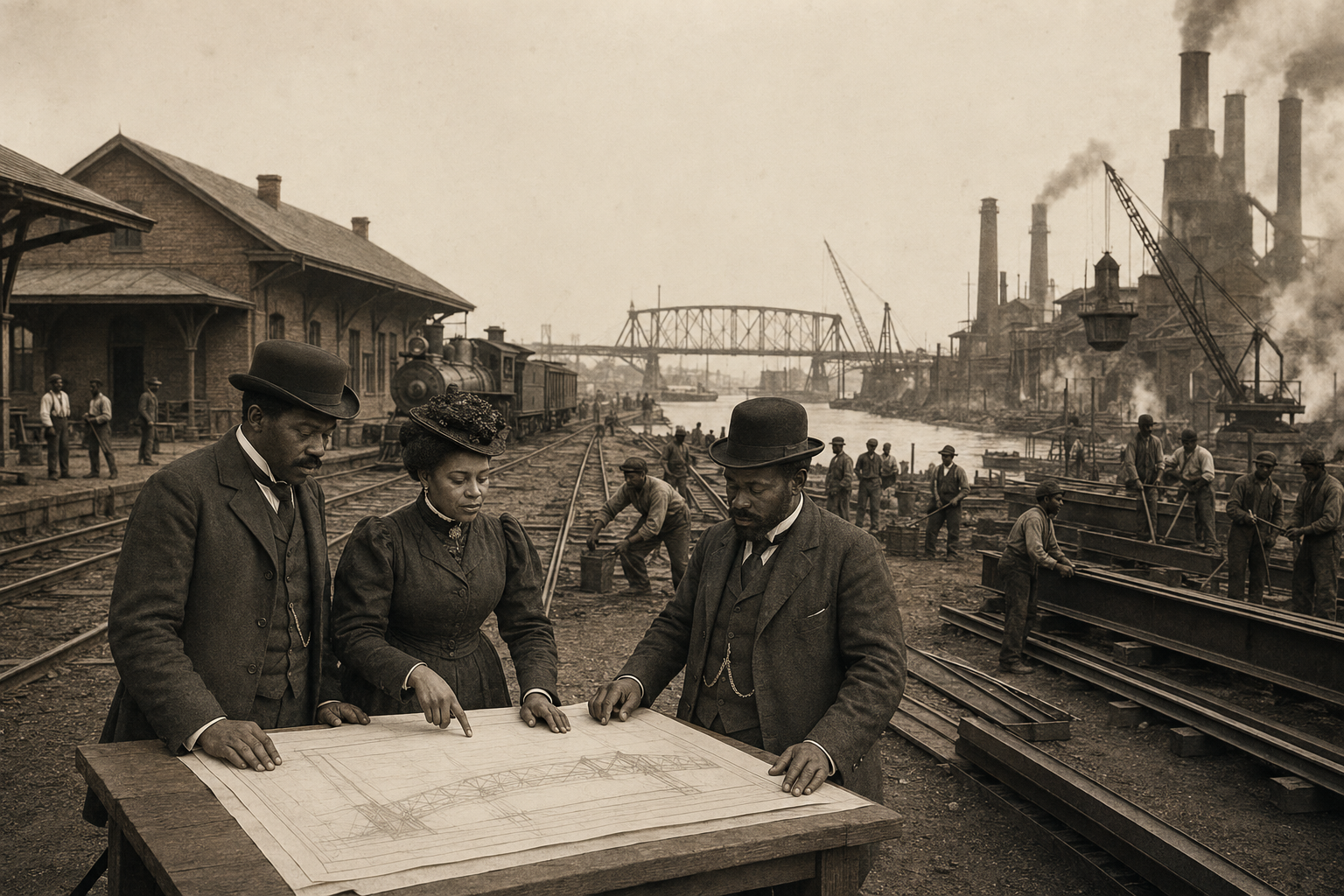
Steel · Rail · River
A city founded on production, shaped by labor, and carried forward by institutions.
Founding identity
Lakewood Falls was founded in 1891 around steel, rail, river access, bridge infrastructure, and supply movement. Its early leaders built mills and transport systems instead of chasing tourism or land speculation. Skilled labor created generational stability, and industrial power became civic authority.
Population & demographics
Lakewood Falls is a Black-majority industrial city with steady, workforce-driven growth anchored by manufacturing, healthcare, construction, logistics, skilled trades, and sports.
Manufacturing and fabrication established the city's first major fortunes and its skilled-trades culture.
Freight yards connected Lakewood Falls to national markets and made logistics a permanent source of influence.
Transport routes powered mills, moved supplies, and turned the working river into a commercial and civic corridor.
Unions converted industrial growth into safer jobs, stable households, and a durable Black middle class.
Hospital expansion moved the city into surgical research, rehabilitation, and advanced medical systems.
Bridge building grew into infrastructure design, robotics, clean steel, and applied manufacturing.
Economic foundation
Families built livelihoods inside mills, yards, hospitals, construction crews, and trade shops, then passed those skills and professional networks forward.
Steel magnate and rail investor Isaiah Blackstone, river-transport pioneer Margaret Calder, and master builder Thomas Rowan established a city around production, transport, and permanent infrastructure.
Steel mills, rail lines, freight yards, bridge crews, and river terminals turned Lakewood Falls into a regional production center. Industrial dynasties secured land, contracts, and long-term civic authority.
Manufacturing reached its peak. Union strength improved safety and pay, skilled trades passed through families, and expanding hospital systems created new professional pathways.
Advanced manufacturing and applied engineering replaced older production methods. Medical research expanded while warehouses and mills were adapted into offices, homes, campuses, and cultural venues.
Lakewood Falls is nationally respected for advanced manufacturing, infrastructure engineering, elite medicine, robotics, skilled trades, and professional sports. Its quiet upper class remains rooted in industrial ownership.
Founding & legacy families
The city's five legacy lines carried industrial and working-class authority into modern boards, foundations, contracts, training programs, and public works.
Steel and rail origins; advanced manufacturing, clean-steel initiatives, and large engineering contracts today.
River transport origins; intermodal yards, supply-chain systems, and national freight distribution today.
Bridge-building origins; major infrastructure firms, commercial development, and public works today.
Medical-expansion origins; hospital governance and nationally connected healthcare philanthropy today.
Skilled-trades and union origins; trade institutes, apprenticeship boards, and construction leadership today.
Geography
A major river cuts through the industrial corridor. Freight terminals line the southern edge, dense brick neighborhoods sit near former mills, and elevated residential districts overlook bridges, highways, hospital complexes, factories, and converted warehouses.
Cold, snowy, and shaped by lake-effect storms. Hockey and indoor gathering take over as construction slows and the city reorganizes around warmth.
Rain-heavy and gradually warming. Construction season accelerates, the river receives renewed attention, and university research moves into public view.
Warm and humid. Baseball, festivals, ferry service, concerts, and Riverwalk activity reach their peak.
Crisp air and early sunsets bring football weekends, harvest markets, formal benefits, and renewed industrial rhythm.
It is the standard Lakewood Falls applies to work, love, loyalty, and community.